
Darkness cannot drive out darkness; only light can do that.
Hate cannot drive out hate; only love can do that.
― Dr. Martin Luther King, Jr.
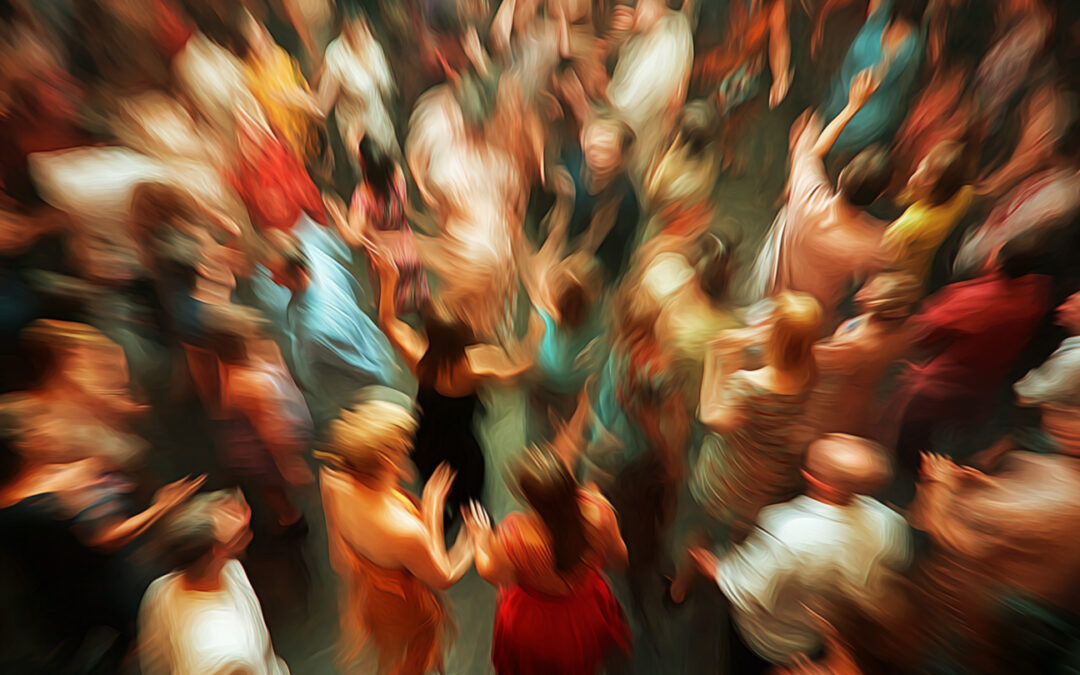
When we gather to dance, we can experience “collective effervescence,” a concept French sociologist Émile Durkheim (1858-1917) minted to describe the joyful bonding we find when sharing in unifying, exciting activity with others. Durkheim theorized that collective effervescence is at the heart of what holds people together.(1)
As we listen to music and dance with one another, we tend to synchronize movements and even our brain activity harmonizes, i.e, we literally get on the same wavelength.(2) This synchronization process, called entrainment, has to do with becoming part of a flow and allowing oneself to be carried along. It can result in “a deeply satisfying experience of boundary loss which, at its farther reaches, becomes ecstatic.”(3)
Effectively, this means that though we may arrive at the dance feeling disconnected, through our participation and movement we can transcend this illusory separateness and leave feeling fully immersed in and part of something bigger than ourselves. We dance ourselves out of divisiveness and into euphoric connection.
Practice creating collective effervescence through dance, and here’s wishing you light and love.
See you on the dance floor… —Sean Donovan
(1) Dance seems to be the ultimate frivolity. How did it become a human necessity?, Aeon (November 13, 2018) video
(2) Margaret Fuhrer, ‘You Think, So You Can Dance?’ Science Is on It., NYT (July 15, 2024)
(3) Greg Levoy, Dancing in the Streets: The Value of Collective Joy, Psychology Today (October 7, 2022)