
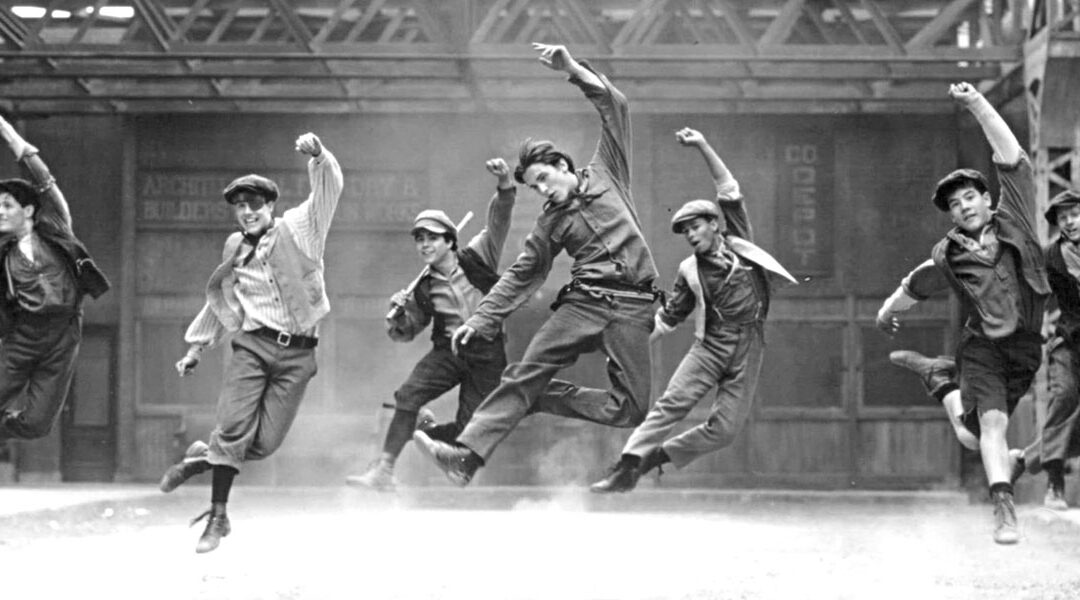
| Image from the article Why the cult classic ‘Newsies’ is a perfect Labor Day movie, August 30, 2024 |
You can do it like it is a great weight on you or you can do it like it’s part of the dance. — Ram Dass
[In the spirit of Labor Day, I’m taking unpaid leave and revising this column which originally ran September 3, 2024]
An estimated ten- to twenty-thousand workers intent on celebrating the first Labor Day (and to press their demands for an eight-hour workday) gathered in New York City on September 5, 1882, thinking to kick off the festivities with a parade. But there was no band and, without music, nobody was willing to march. Luckily, musicians ultimately showed up, the parade progressed and the day was saved. (1)
This event came at a time when the average American laborer worked 12-hour days, with children as young as 5 or 6 toiling in mills, factories and mines across the country. Workers were exposed to “extremely unsafe working conditions, with insufficient access to fresh air, sanitary facilities and breaks.” (2)
Union leaders had organized the celebration, and labor union members, along with other tradespeople, took unpaid leave (Labor Day didn’t become a national holiday until 1894) to march. “The day culminated in picnics, speeches, fireworks, and dancing.” (3)
Listening to music, and dancing, both release dopamine and endorphins, a natural mood booster and painkiller, respectively. Small wonder celebrations so often include — or downright require — music and dance, when they’re so effective at lifting our spirits and literally helping us feel no pain!
Hopefully you got the chance to dance on Labor Day, and there’s lots of “work” to be done dancing this week and beyond. View new and regular classes and events online at the Dance Calendar.
See you on the dance floor —Sean Donovan
(1) Heather Cox Richardson, Letters from an American (Sep.1, 2024)
(2) Labor Day, History.com
(3) Investopedia, The History of Labor Day (Aug.21, 2024)